Book manuscript in progress
Silent Shifts
Male Migration and the Feminization of Politics
The Argument
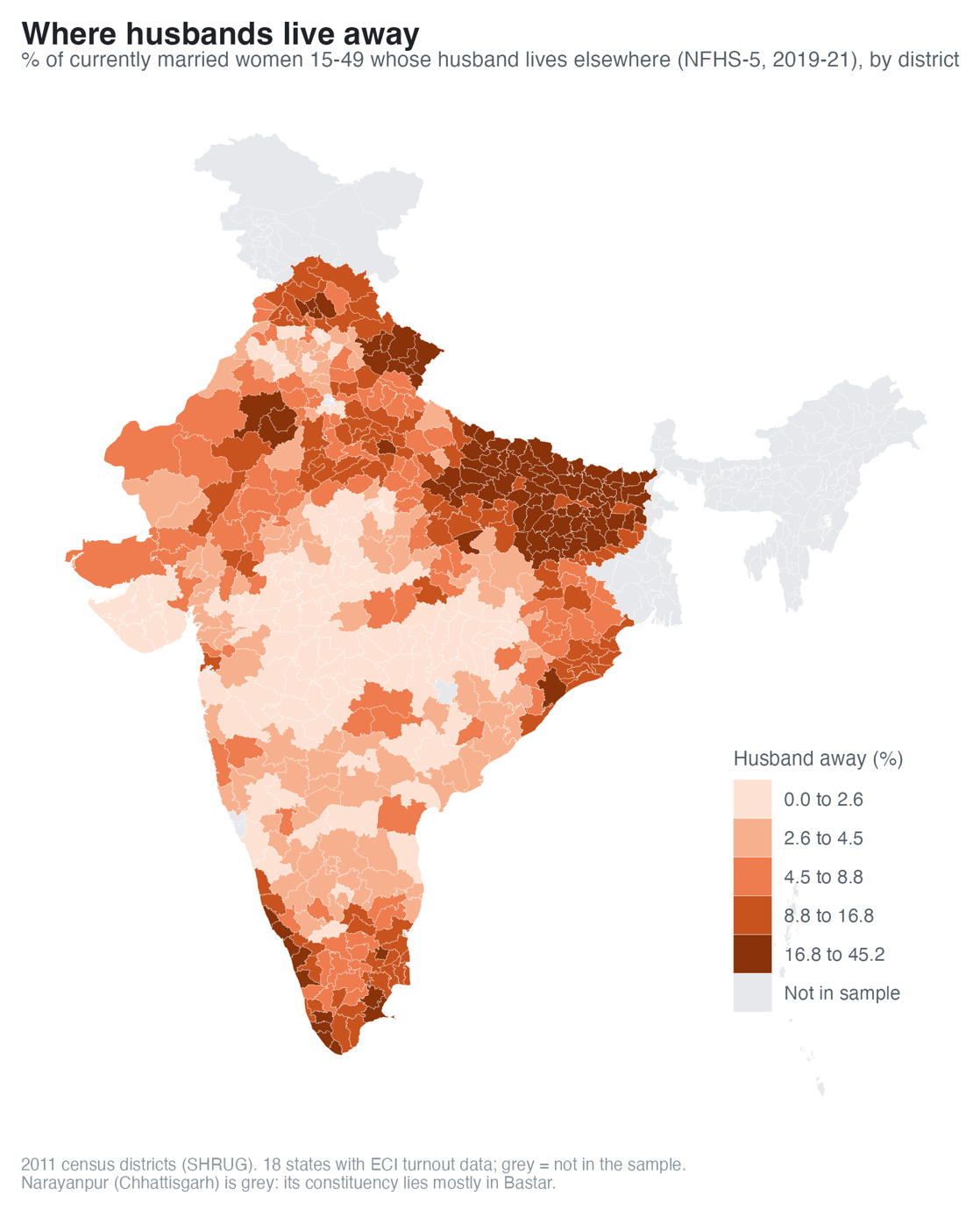
More than 100 million people in India migrate temporarily for work each year, often leaving behind their spouses and families for months on end. The book asks what happens to politics in the places men leave. Specifically, it proposes that a significant yet massively understudied demographic phenomenon, male migration, impacting millions of households across the globe, is feminizing local and regional politics. Contra existing theories, it argues that male absence due to migration can facilitate women’s political engagement even in the absence of their financial autonomy. Male migration expands the realm of women’s access to the public sphere by lifting norm-based restrictions on female presence as norms bend to adapt to economic change. Communities rationalize the women’s expanded role within the household resulting in the heightened presence of women in otherwise male dominated arenas in migrant sending regions. I propose that this shift expands to electoral politics in that it is feminizing the political agenda, both at the local and regional level, as women become pivotal to electoral politics. Together, these shifts mark the feminization of politics that operates within the household, in the village and beyond.
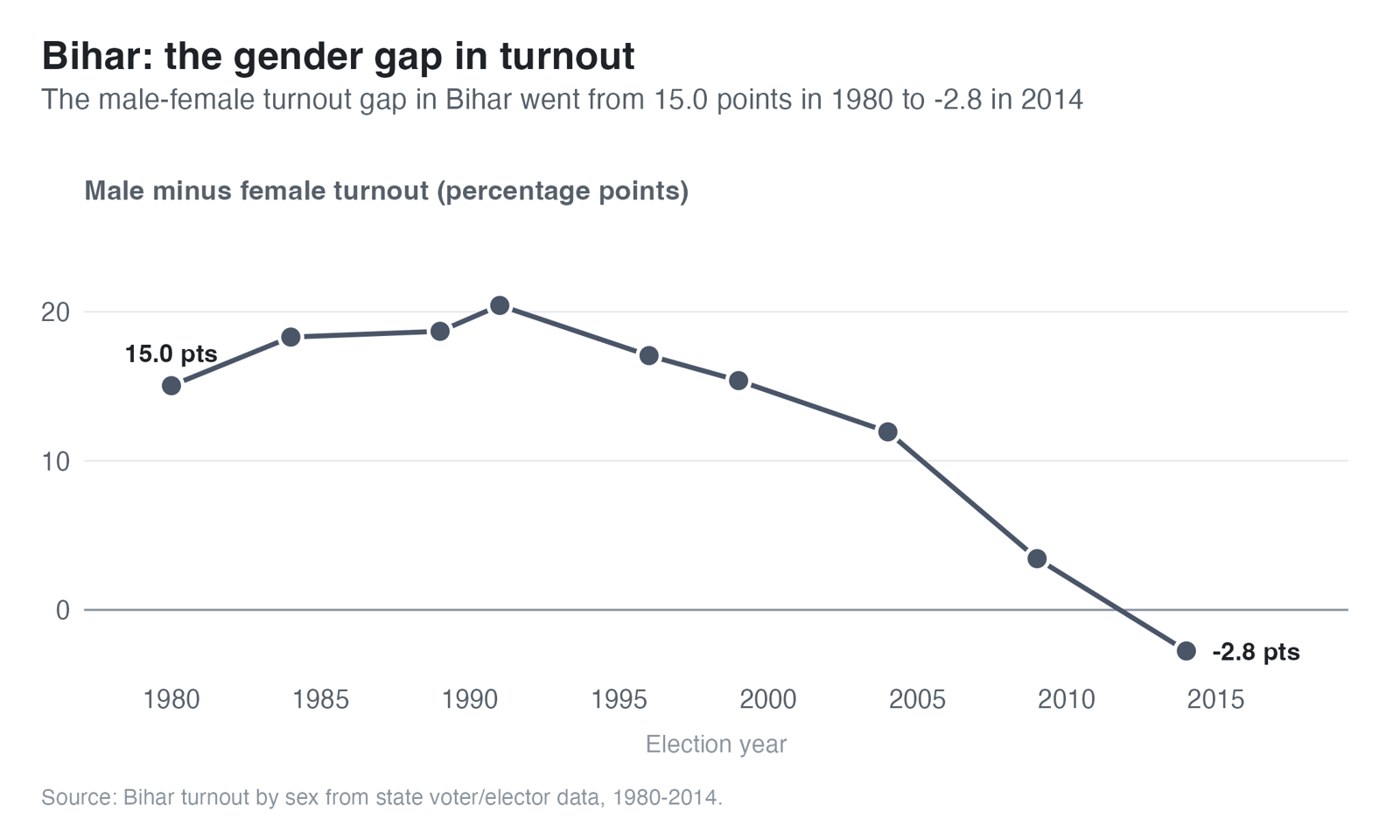
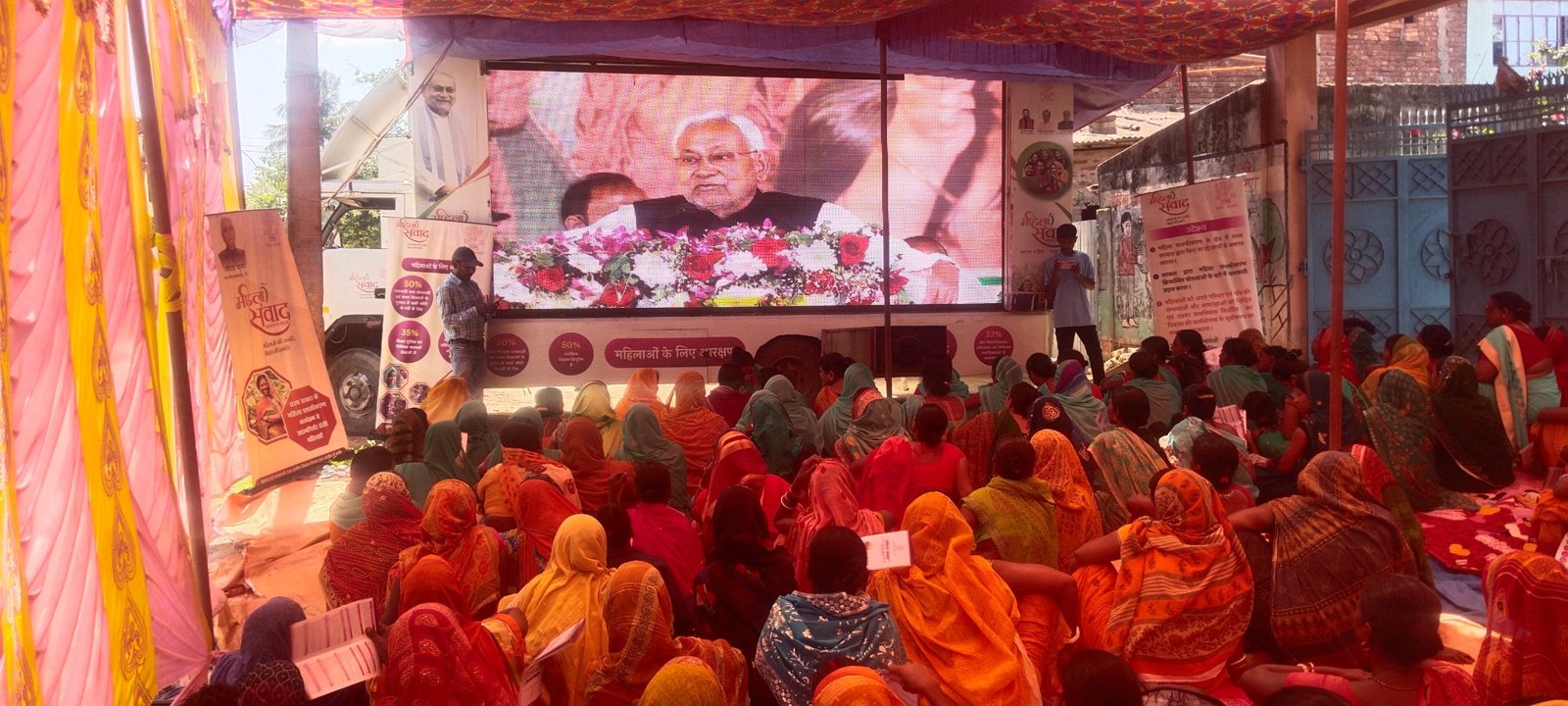
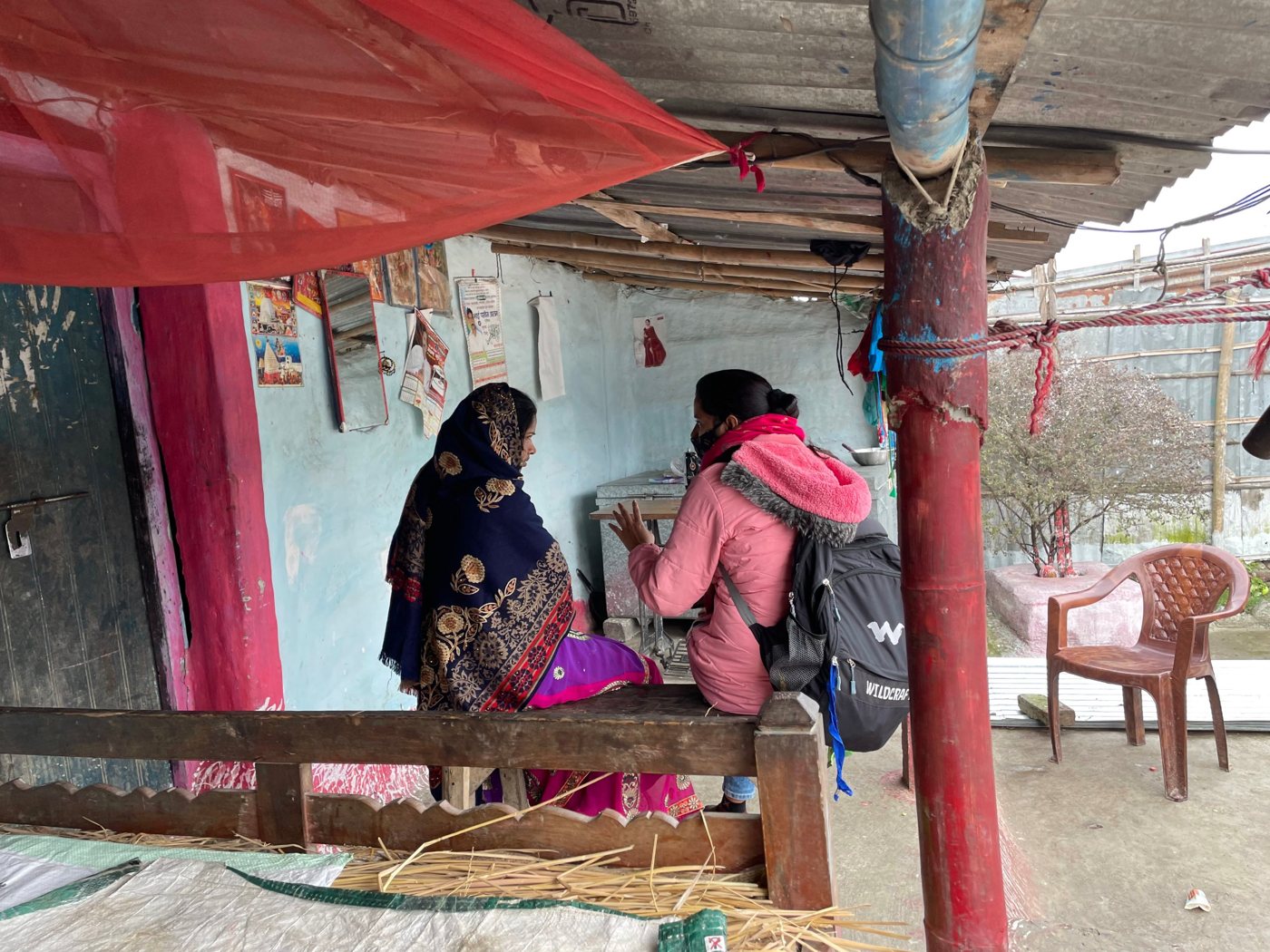
Using a mixed-method research design, the book brings together multiple data sources to present evidence for its argument. It uses in-person qualitative and ethnographic evidence from Bihar, India to build theory and develop its hypothesis. Demographic and Health Survey data from across the globe are used to provide a descriptive portrait of the migrant household. Further, drawing on a survey experiment, original surveys and qualitative fieldwork in Bihar, alongside nationally representative panel data, the book shows that men’s absence lifts implicit restrictions on women’s engagement. Women in migrant households make more claims on the state, take part in civic life and discuss politics, even without gaining financial autonomy. The effects do not stop at the household. As male out-migration rises and women’s voter turnout overtakes men’s, parties and politicians come to see women as electorally pivotal, and political agendas shift toward them. Using party manifestos, videos of campaign speeches and surveys of local politicians, the book traces this feminization of politics from the village to state and national campaigns.
Related Work
Journal of Politics 88(4): 1483–1495